
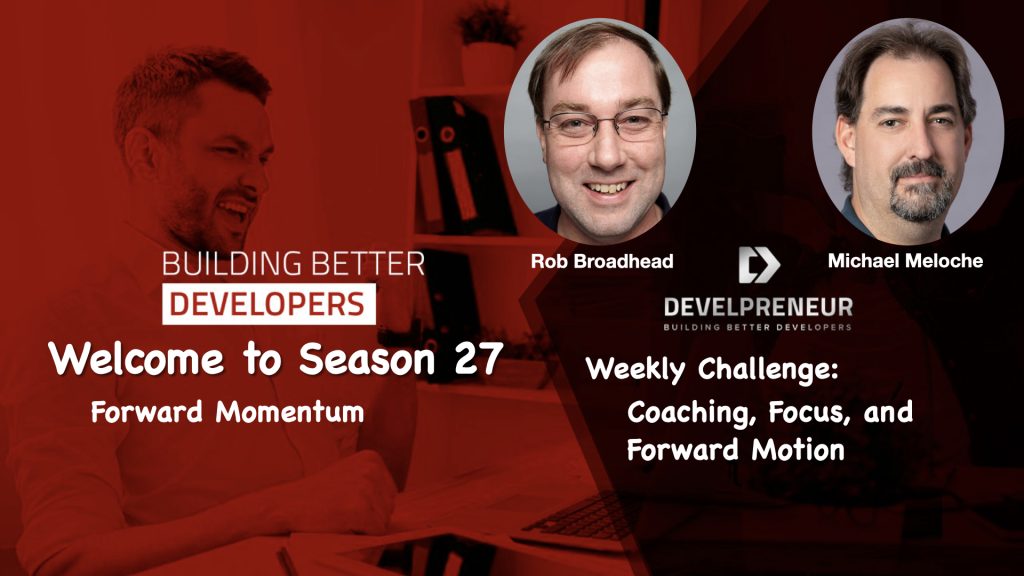

This week on Building Better Developers, Season 27: Moving Things Forward, Rob and I tried something new: a Friday Challenge episode that’s designed to be more practical, more direct, and easier to act on. The idea is simple—recap the week’s main episode, share what stood out, and end with one challenge you can actually do.
The main episode we’re reflecting on featured Andrew Hinkelman, and the theme was coaching—what it is, why it works, and how it connects to the stuff developers actually struggle with: focus, burnout, priorities, and forward progress.
New Friday Format
We’re experimenting with an extra weekly episode on YouTube—less “podcast stuff,” more reflection + action. If you like the format, tell us. If you hate it, definitely tell us.
The Real Topic: Coaching Is About the Whole Person
One of the strongest takeaways from Andrew was that professional development and personal development are tied together. That resonates with developers more than we like to admit. When you’re overwhelmed, stuck, or burned out, the symptoms show up everywhere—your work, your communication, your energy, your consistency, and your confidence.
Andrew’s coaching approach felt grounded. Not “motivational poster” energy—more like: be honest about what’s happening, measure it, and build a path forward.
I’ve never really spent much time talking with a coach before, so this conversation hit differently. A lot of the early discussion overlapped with things Rob and I talk about all the time: focus on fewer tasks, avoid endless task creep, and “eat the frog” (handle the hardest thing first). But what stood out was the emphasis on self-awareness—especially emotional awareness.
Andrew mentioned using tools like emotional intensity checks to understand where you are mentally and emotionally before you try to “power through.” That matters because when your internal state is off, your to-do list becomes a trap. You stay busy, but you don’t move forward.
The Burnout Warning Sign
If you’re working mornings to evenings and the “bar isn’t moving,” the problem might not be effort—it might be focus.
The Hidden Enemy: Scope Creep Masquerading as “Productivity”
We also dug into something that hits developers constantly: how do you know when you’re making progress… versus just expanding the work?
Rob shared a great example: a task that should’ve taken 15 minutes turned into hours because it evolved into something more valuable—assets, reusable pieces, and outcomes that could be repurposed. That kind of scope creep can be good… if it’s intentional.
The key distinction he kept coming back to was:
- What does success look like this week?
- Is this moving the ball forward toward that?
- If not, can you backlog it and keep moving?
That’s a mindset shift. Developers see improvements everywhere—cleaner UI, better performance, nicer flow—and it’s tempting to fix everything while you’re in the code. But unless it’s a quick win or a real risk, it’s often smarter to write it down and punt it.
Tools Help, But Only If They Create Visibility
We also touched on the business side: checking your financials regularly, even if you’re “just a developer” running a side hustle. Rob recommended doing a quick assessment every 3–4 months: what’s coming in, what’s going out, taxes, insurance, deductions.
I added a practical note: tools help because they create visual indicators. Whether you use QuickBooks, Wave, or spreadsheets, don’t just stare at numbers—build graphs or dashboard signals that show when you’re drifting off track.
Don’t Doomscroll Your Own Business
If your system doesn’t surface problems quickly, you’ll avoid it… until it’s painful.
The Friday Challenge: Find What You’re Stuck On
Here’s the challenge Rob laid out, and it’s worth doing:
- List at least 3 ongoing problems that have been bugging you (weeks, months, whatever).
- For each one, classify it:
- Are you already working through it?
- Do you actually need to learn it—or could you outsource it?
- Are you genuinely stuck with no clear path forward?
- Pick one thing you’re stuck on and reach outside your own head:
- Ask a friend or mentor
- Email someone
- Look for a coach specific to that problem
- Even do a targeted search with a clear question
But before you sprint into “solutions,” pause. Andrew’s point was important: trust yourself enough to define the real problem first.
Because the wrong question leads to the wrong fix—even if the answer sounds confident.
Closing Thought: Reflection Creates Forward Motion
This Friday Challenge format is meant to be a reset button—a small moment to reflect so you don’t stay buried in the weeds. You can’t improve what you don’t notice, and you can’t move forward if you’re sprinting in circles.
Try the challenge. Find one stuck point. Get one outside perspective. And next week, aim for one improvement—small, real, and measurable.
Stay Connected: Join the Developreneur Community
We invite you to join our community and share your coding journey with us. Whether you’re a seasoned developer or just starting, there’s always room to learn and grow together. Contact us at [email protected] with your questions, feedback, or suggestions for future episodes. Together, let’s continue exploring the exciting world of software development.