

There’s a big difference between being busy and building something that lasts.
Many entrepreneurs don’t realize they’re stuck in that gap. They’re working hard, juggling responsibilities, hustling nights and weekends — but the business isn’t really moving forward.
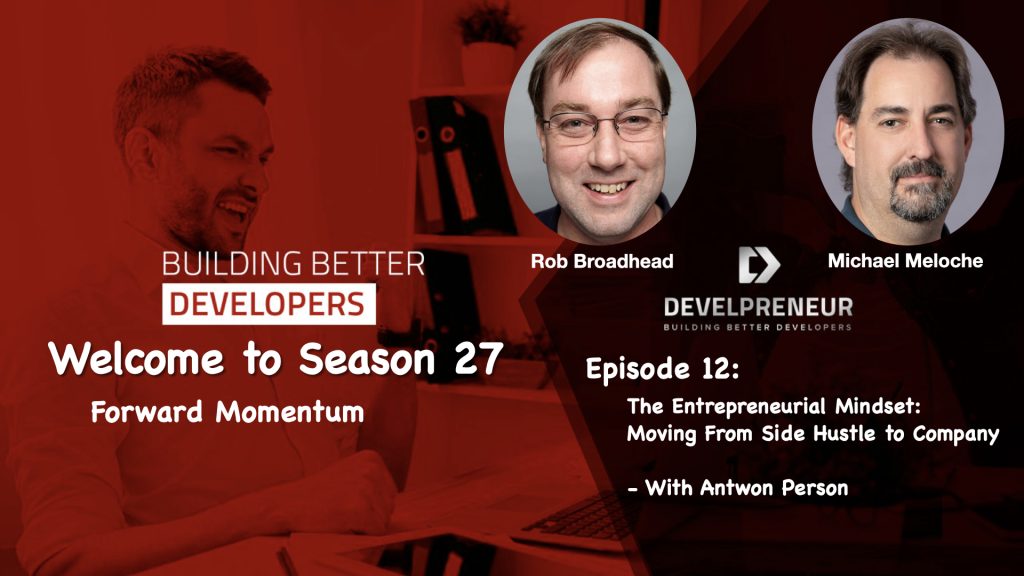
In this episode of Building Better Developers, Army veteran and founder of Skillful Brands, Antwon Person, breaks down what actually creates forward momentum in a business. And it’s not hype, hacks, or grinding harder. It’s mindset, structure, and knowing when to leverage.
The Entrepreneurial Mindset Isn’t About Hustle — It’s About Structure
When Antwon left a 22-year military career and stepped into entrepreneurship, he brought discipline and leadership with him. What he discovered quickly, though, was that discipline alone doesn’t build a company.
Like many new entrepreneurs, he was busy. Very busy. But busy didn’t mean structured.
He realized something that most founders eventually learn the hard way: being busy in your business does not build a business.
You can answer emails all day. You can tweak branding, post on social media, and chase opportunities. But without structure underneath those actions, you’re just reacting — not building.
That realization changed everything. Instead of chasing more tactics, he looked for clarity — and found it by connecting with someone who already had a blueprint.
Momentum without structure leads to burnout. Structure without momentum leads to stagnation. The entrepreneurial mindset requires both — in the right order.
Why Your First Mentor Doesn’t Need to Be in Your Industry
There’s a common mistake new entrepreneurs make: assuming they need a mentor who does exactly what they do.
Antwon disagrees — at least in the beginning.
When you’re building the foundation of a business, the fundamentals are universal. Every business needs clear goals, defined processes, the right mindset, and repeatable systems. At the early stage, what you need most isn’t industry secrets — it’s business fundamentals.
He sees too many entrepreneurs jumping into advanced marketing tactics before they’ve validated their structure. They’re polishing something that hasn’t been built properly yet. It’s like trying to optimize a machine that hasn’t been assembled.
Don’t work on Phase 3 problems while you’re still in Phase 1. Build proof of principle first. Everything else comes after.
Once your foundation is solid and revenue is predictable, niche-specific coaching becomes powerful. But without a base, advanced tactics won’t stick.
The $10K Rule and the Leverage Phase
One of the most practical insights from this conversation is Antwon’s revenue-based approach to scaling.
Up to around $10K per month, many entrepreneurs can manage operations solo — if they have structure. Beyond that point, things change. The workload compounds, communication increases, tasks multiply. Growth creates friction.
That’s where leverage becomes necessary. Instead of calling it “growth mode,” Antwon frames it as entering the leverage phase — and that shift in language matters.
Leverage means delegation, systems that support scale, clear onboarding, and defined ownership. Without it, revenue growth just creates exhaustion. With it, growth becomes sustainable.
Hiring help isn’t about spending money. It’s about buying back focus and multiplying capacity.
Why Hiring a VA Feels Hard — and How to Fix It
For many entrepreneurs, hiring a virtual assistant feels overwhelming. There’s hesitation: Will they understand what I need? Is it worth the cost? Will this just create more work for me?
Antwon has lived through that. In the early stages, bringing on VAs felt like adding another job to his plate — confusion, repetition, miscommunication. The problem wasn’t the VA. It was the lack of onboarding and structure.
So he built a system. Now, every VA goes through a clear onboarding process, alignment with company mission and goals, defined task management inside tools like Monday or Asana, and screen-recorded walkthroughs for clarity.
Instead of typing long explanations, he records a short screen demo showing exactly what he wants done and attaches it to the task. That single change reduced confusion dramatically.
He also emphasizes ownership — VAs aren’t treated like task robots, they’re treated like team members. That shift alone changes performance.
Stop Networking to Sell — Start Networking to Serve
Too many entrepreneurs approach networking with one goal: sell. Antwon flips that completely.
When he meets someone new, he focuses on learning who they are, understanding what partners they’re looking for, offering value first, and leveraging connections instead of pushing services.
He even shared a small but practical tactic he picked up in a free mastermind group — placing a QR code on his Zoom background so people could instantly access his information. Not a sales pitch. A friction reducer. And those small adjustments compound over time.
The strongest networks aren’t built on transactions. They’re built on trust, value, and long-term reciprocity.
Side Hustle vs. Company: The Real Mindset Shift
One of the most important distinctions Antwon makes is between running a business and building a company.
A business depends on you. A company operates beyond you. A business can generate income. A company can generate legacy.
If your goal is supplemental income, operating as a side hustle may be fine. But if your goal is generational wealth or long-term impact, the mindset must shift. You have to design something that can function without your constant involvement — documented systems, delegated responsibilities, clear structure, leadership beyond yourself.
And that shift starts internally. Because the hardest part of entrepreneurship isn’t marketing or operations. It’s believing you don’t have to do it all yourself.
The Real Blocker Is Mindset
Throughout this episode, one theme keeps resurfacing: mindset is the biggest barrier. Not lack of information. Not a lack of opportunity. Mindset.
Entrepreneurs stall because they listen to too many voices, hesitate to start, refuse to delegate, treat a business like a hobby, or avoid structure. Once the mindset shifts, everything else becomes simpler. Not easy — but simpler.
Final Takeaway
If you feel stuck in your business right now, ask yourself: Are you building something structured — or just staying busy? Have you proven your foundation? Have you entered the leverage phase? Or are you still operating like a side hustle when your goal is a company?
Forward momentum doesn’t come from more hustle. It comes from clarity, structure, and the willingness to step into the next phase of growth. That’s the entrepreneurial mindset shift that changes everything.
Stay Connected: Join the Developreneur Community
👉 Subscribe to Building Better Developers for more conversations on momentum, leadership, and growth. Whether you’re a seasoned developer or just starting, there’s always room to learn and grow together. Contact us at [email protected] with your questions, feedback, or suggestions for future episodes. Together, let’s continue exploring the exciting world of software development.