
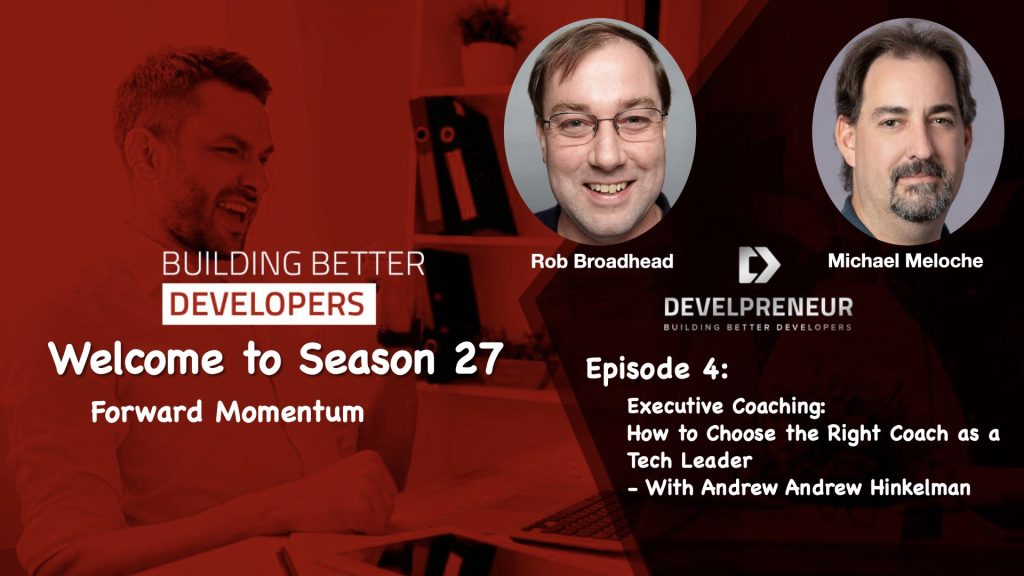

For many developers and engineering leaders, executive coaching feels like something you turn to only when things go wrong. We’re trained to solve problems, push through obstacles, and rely on our own expertise. So when progress slows, the default reaction is often to work harder—not to step back and reassess.
That’s exactly why executive coaching can be so valuable when used intentionally.
At its best, coaching isn’t about fixing weaknesses. It’s about uncovering blind spots, challenging assumptions, and helping capable leaders see where their habits are limiting growth. When the fit is right, coaching brings clarity and momentum. When it’s wrong, it simply adds noise.
About Andrew Hinkelman
Andrew Hinkelman is a certified executive coach and former Chief Technology Officer who works with tech founders, CTOs, and engineering leaders to strengthen their leadership and people skills.
With over 25 years of corporate experience, including 8 years as a CTO, Andrew understands firsthand the pressures technical leaders face as they move from hands-on execution to leading teams and organizations. His coaching focuses on helping leaders build trust, develop others, and stay strategic as responsibilities grow.
Andrew’s philosophy is simple: all professional development is personal improvement. After experiencing burnout in his own leadership journey—constantly stepping in to fix problems and being needed by everyone—he learned the value of trusting his team instead of controlling outcomes.
Today, Andrew helps leaders avoid that same trap by building resilient teams, focusing on relationships, and creating environments where others can succeed.
Follow Andrew on Instagram and LinkedIn.
What executive coaching actually does
Leadership coaching is frequently misunderstood, especially in technical environments. It’s not mentoring, consulting, or performance management.
Rather than providing answers, a coach helps leaders examine how they think, make decisions, and show up—particularly under pressure. This kind of perspective is difficult to gain from inside your own day-to-day context.
For technical leaders, this distinction matters. Many engineers advance by being exceptional problem solvers. Over time, that strength can become a constraint. Coaching helps leaders recognize when execution, control, or perfectionism starts to limit influence, trust, and scale.
At its core, this work builds awareness—and awareness is what enables meaningful change.
When executive coaching is the right move
Coaching isn’t necessary at every stage of a career. If progress feels steady and challenges are manageable, it may not add much value.
However, it becomes especially useful during moments of transition or tension, such as:
- Stepping into a new leadership role
- Navigating organizational or team change
- Feeling stuck despite sustained effort
- Noticing that familiar approaches no longer work
These moments often signal that your environment has changed—but your operating model hasn’t. A strong coaching relationship helps leaders adapt intentionally instead of reacting out of habit.
Executive coaching for leaders in new roles
New leadership roles come with unspoken expectations. Success is no longer defined purely by output, and feedback becomes less direct or less frequent.
Many leaders assume they need to “get everything under control” before working with a coach. In reality, coaching is most effective when things still feel unclear. That uncertainty highlights where growth is needed—whether in communication, prioritization, delegation, or decision-making at scale.
You don’t need to show up polished. You need to show up honestly.
What a real coaching engagement looks like
One common misconception is that leadership coaching is a one-time conversation or a motivational reset.
In practice, effective coaching is an ongoing engagement built around clarity, feedback, and behavior change over time. It starts with defining what success actually looks like—not in abstract terms, but in concrete outcomes that matter to you and your organization.
From there, the work focuses on identifying what’s getting in the way. Often, these are habits that once helped you succeed but now create friction. If they were obvious, you would have addressed them already.
Many engagements begin with structured feedback to ground the work in reality. This helps align self-perception with impact and reduces guesswork. It’s not about judgment—it’s about accuracy.
How to evaluate coaching fit
Coaching is a relationship, not a transaction. Talking to multiple coaches isn’t optional—it’s essential.
A strong indicator of fit is experiencing a real working session rather than a polished sales call. Pay attention to how the coach listens, challenges assumptions, and guides reflection.
Productive discomfort is often a good sign. If you leave a session seeing a situation differently or questioning a long-held belief, growth is likely. If you leave feeling simply validated, it probably isn’t.
Red flags that signal a poor coaching fit
Coaching is not a rescue tool for poor performance. When someone is disengaged or unwilling to grow, it rarely works.
Another red flag is a coach who consistently agrees with you. Comfort feels good in the moment, but it doesn’t change behavior. Effective leadership development introduces intentional, constructive friction that leads to insight.
Executive coaching during burnout and plateaus
Burnout often comes from effort without impact. Leaders work longer hours, take on more responsibility, and still feel stuck.
Coaching can help identify a keystone goal—the one focus area that makes everything else easier. It also helps leaders stop over-investing emotional energy in things outside their control, which is a common and costly source of exhaustion in senior roles.
Executive Coaching Checklist
- Signs coaching may help you move forward
- Indicators that a coach will challenge rather than placate
Coaching Fit Test: One Session
- What a meaningful trial session should reveal
- How to tell if the coach will stretch your thinking
Stuck or Burned Out? Find the Keystone Goal
- How to identify the one change that unlocks momentum
- A reset approach for overwhelmed leaders
Conclusion
Executive coaching isn’t about hiring someone to give advice—it’s about choosing a partner who helps you see yourself and your situation more clearly. If you’re navigating change, feeling stalled, or sensing that effort isn’t translating into progress, this kind of support may be less about doing more and more about seeing differently.
Stay Connected: Join the Developreneur Community
We invite you to join our community and share your coding journey with us. Whether you’re a seasoned developer or just starting, there’s always room to learn and grow together. Contact us at [email protected] with your questions, feedback, or suggestions for future episodes. Together, let’s continue exploring the exciting world of software development.