
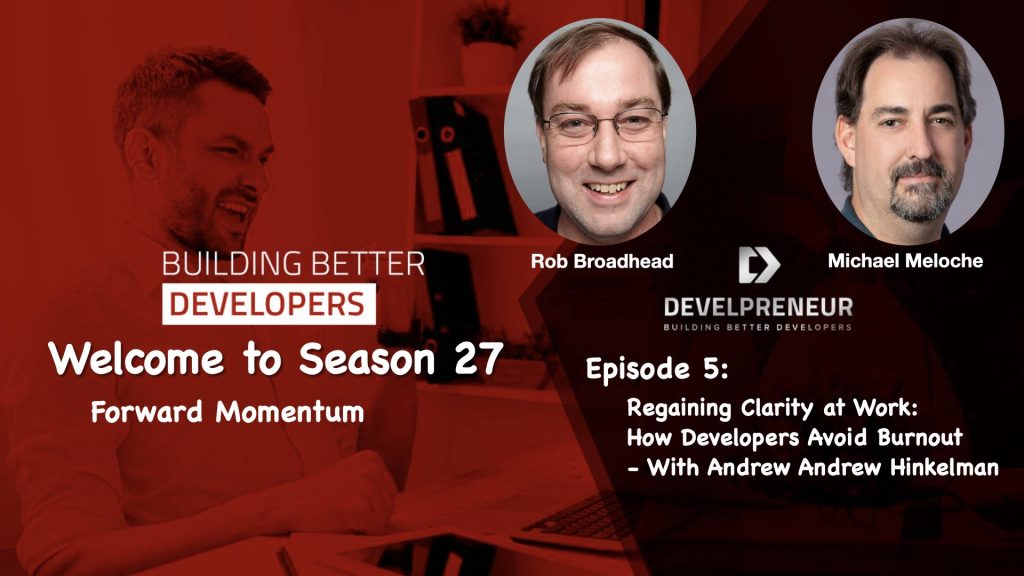

Regaining clarity at work is one of the biggest challenges developers face as responsibilities grow, distractions multiply, and expectations rise. Burnout rarely appears overnight. More often, it creeps in quietly—through constant context switching, mental fatigue, and the feeling that you’re busy all day but not making real progress.
For developers and technical leaders, clarity isn’t a “nice to have.” It’s what allows you to make good decisions, focus deeply, and enjoy the work you’re doing. Without it, even small tasks feel heavier than they should.
About Andrew Hinkelman
Andrew Hinkelman is a certified executive coach and former Chief Technology Officer who works with tech founders, CTOs, and engineering leaders to strengthen their leadership and people skills.
With over 25 years of corporate experience, including 8 years as a CTO, Andrew understands firsthand the pressures technical leaders face as they move from hands-on execution to leading teams and organizations. His coaching focuses on helping leaders build trust, develop others, and stay strategic as responsibilities grow.
Andrew’s philosophy is simple: all professional development is personal improvement. After experiencing burnout in his own leadership journey—constantly stepping in to fix problems and being needed by everyone—he learned the value of trusting his team instead of controlling outcomes.
Today, Andrew helps leaders avoid that same trap by building resilient teams, focusing on relationships, and creating environments where others can succeed.
Follow Andrew on Instagram and LinkedIn.
Why Regaining Clarity at Work Matters for Developers
When regaining clarity at work starts to slip, the symptoms are subtle at first. Decisions take longer. You second-guess yourself more often. Work that once felt engaging starts to feel draining.
This isn’t a motivation problem. It’s a clarity problem.
Developers often push through this phase by working longer hours, assuming effort will fix it. In reality, the lack of clarity compounds the problem—leading to frustration, reduced quality, and eventually burnout.
How Distractions Undermine Regaining Clarity at Work
Modern work environments make regaining clarity at work especially difficult. Messages, emails, meetings, and notifications constantly pull attention away from focused thinking. Even well-intentioned tools can fragment your day into shallow work.
The issue isn’t that developers aren’t capable of focus—it’s that focus is constantly interrupted. Over time, this makes it harder to think clearly, prioritize effectively, or feel confident in decisions. The result is mental overload, not progress.
Regaining Clarity at Work Through Better Daily Habits
One of the most practical ways to regain clarity at work is by examining daily habits. Not in a rigid or extreme way, but by noticing patterns.
What creates a good day?
What leaves you feeling depleted?
Sleep, movement, downtime, and boundaries play a much larger role in clarity than most developers expect. Clarity isn’t created in moments of intensity—it’s supported by consistency.
Self-Discipline as a Foundation for Regaining Clarity at Work
Self-discipline is often misunderstood as pushing harder. In reality, it’s about protecting the habits that keep your energy stable. Waiting for weekends or vacations to reset burnout doesn’t work if every weekday drains you.
Regaining clarity at work means building routines that prevent depletion before it happens.
Regaining Clarity at Work by Trusting Yourself
When developers feel stuck, the instinct is often to search for more input—another article, another video, another framework. But more information rarely creates clarity.
In many situations, you already know how to handle the challenge in front of you. Learning to pause, quiet your mind, and trust your experience can be more effective than consuming more advice. Regaining clarity at work often comes from removing noise, not adding insight.
Regaining Clarity at Work with Allies and Peer Support
Clarity is much easier to regain when you’re not working in isolation. Talking through challenges with trusted peers helps break mental loops and introduce new perspectives.
These allies don’t need to be your manager. In fact, regaining clarity at work often comes faster when support comes from peers across teams or outside your organization—people who understand the context but aren’t tied to the outcome.
Expanding Beyond Your Manager to Regain Clarity at Work
Strong peer relationships act as soundboards. They help you reality-check assumptions, think through decisions, and feel less alone in complex situations. Over time, these relationships become one of the most reliable ways to avoid burnout.
Regaining Clarity at Work with Coaching and AI Tools
Coaching and AI tools can both support regaining clarity at work, but they serve different roles. Some developers find value in AI prompts or structured reflection. Others need human conversation, body language, and shared experience.
For many, a hybrid approach works best—using tools when they’re helpful, and people when nuance, accountability, or emotional context matters. The goal isn’t to replace connection, but to support clarity when it’s needed most.
Signs You’re Losing Clarity at Work
- Constant distraction, overthinking, and decision fatigue
- Relying on weekends or time off as the only recovery strategy
Simple Habits That Restore Clarity
- Daily actions that protect energy and focus
- Consistency over intensity when rebuilding clarity
When to Use Coaching, AI, or Allies
- Choosing the right support for the situation
- Combining human insight with practical tools
Conclusion
Regaining clarity at work isn’t about doing more—it’s about doing what matters consistently. By protecting your energy, trusting yourself, and leaning on the right support, developers can avoid burnout and move forward with confidence.
Take one small step this week toward regaining clarity at work, and start building habits that support sustainable, focused growth.
Stay Connected: Join the Developreneur Community
We invite you to join our community and share your coding journey with us. Whether you’re a seasoned developer or just starting, there’s always room to learn and grow together. Contact us at [email protected] with your questions, feedback, or suggestions for future episodes. Together, let’s continue exploring the exciting world of software development.