

If you’ve ever shipped fast only to realize no one wanted what you built, you’ve felt the tension behind balancing building and feedback. As developers, we’re trained to execute against known requirements. As soon as you step into product ownership, consulting, or entrepreneurship, those guardrails disappear.
Now you have to decide what to build, who it’s for, and why it matters—while still making forward progress. Get it wrong, and you either drown in feedback or disappear into code. Get it right, and you create steady momentum without wasting effort.
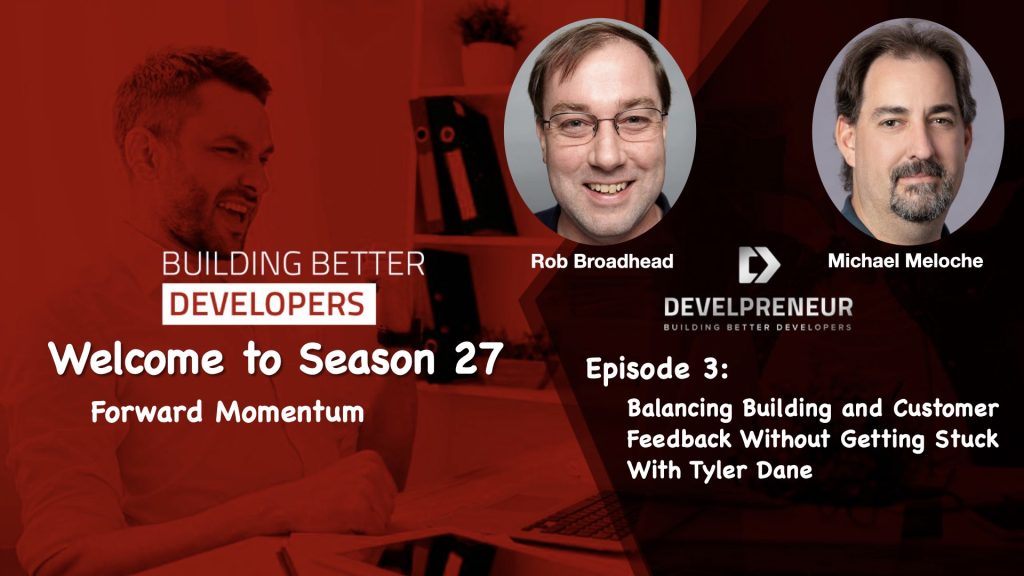
This interview continues our discussion with Tyler Dane as we break down a practical, repeatable system for balancing building and feedback so you can keep shipping and stay aligned with real customer needs.
About Tyler Dane
Tyler Dane has dedicated his career to helping people better manage—and truly appreciate—their time.
After working as a full-time Software Engineer, Tyler recently stepped away from traditional employment to focus entirely on building Compass Calendar, a productivity app designed to help everyday users visualize and plan their day more intentionally. The tool is built from firsthand experience, not theory—shaped by years of experimenting with productivity systems, tools, and workflows.
In a bold reset, Tyler sold most of his belongings and relocated to San Francisco to focus on growing the product, collaborating with partners, and pushing Compass forward.
Outside of coding, Tyler creates YouTube videos and writes about time management and productivity. After consuming countless productivity books, tools, and frameworks, he realized a common trap: doing more without actually accomplishing what matters. That insight led him to break productivity down into its most practical, nuanced components—cutting through hustle culture noise to focus on systems that actually work.
Tyler is unapologetically honest and independent. With no investors, no sponsors, and nothing to sell beyond the value of his work, his focus is simple: help people get more done—and appreciate the limited time they have to do it.
Follow Tyler on LinkedIn, YouTube, and X.
Balancing building and feedback starts with a clear v1
The biggest cause of wasted effort isn’t bad code—it’s unclear scope. A clear v1 isn’t a long feature list; it’s a decision about which problem you are solving first.
When v1 is defined, feedback becomes directional instead of distracting. You can evaluate every request with a simple question: Does this help solve the v1 problem? If the answer is no, it goes into a parking lot—not the backlog.
Without that clarity, every conversation feels urgent, and every idea feels equally important.
Balancing building and feedback by timeboxing your week
Unstructured time leads to extremes. One week becomes all coding. The next becomes all conversations. Neither works for long.
Timeboxing forces balance by design. Decide when you build and when you listen—and protect those blocks like production systems. This removes decision fatigue and prevents emotional swings based on the latest conversation.
The Weekly Balance Blueprint
- Pick a structure: daily outreach blocks or one dedicated feedback day
- Convert feedback into next-week priorities instead of mid-week pivots
Consistency matters more than perfection.
Balancing building and feedback with daily “business refocus” blocks
Short check-ins keep you out of the weeds. Spend 10–15 minutes at the start and end of your day to reconnect with the business context.
Ask yourself:
- Who is this for?
- What problem am I solving?
- What actually moved the product forward today?
These moments prevent scope creep and help you code with intent instead of habit.
Balancing building and feedback using personal sprints
Personal sprints introduce rhythm. Two- or three-week cycles work well because they’re long enough to produce meaningful output and short enough to adjust course.
Each sprint should include:
- Focused build time
- Planned feedback windows
- Explicit integration of what you learned
This keeps learning and execution tightly coupled, rather than competing for attention.
Balancing building and feedback through problem-first customer research
Feedback becomes overwhelming when you ask the wrong questions. Feature requests are noisy. Problems are signals.
Focus conversations on how people experience the problem today, what frustrates them, and what “better” looks like. This approach surfaces patterns instead of opinions.
Problem-First Customer Conversations
- Ask about pains, workarounds, and desired outcomes
- Use “not our customer” signals to narrow your focus
Clarity often comes from who you don’t build for.
Balancing building and feedback to prevent feature overload
Not all feedback belongs in your product. Filtering input is a leadership skill.
Use your v1 definition and target customer as a lens. Some ideas are valuable later. Some indicate a different market entirely. Saying “no” protects your momentum and your sanity.
Balancing building and feedback by turning conversations into messaging
Customer conversations don’t just shape the product—they shape how you talk about it. The language people use to describe their pain becomes your marketing copy.
When your messaging mirrors real problems, alignment improves across sales, onboarding, and product decisions.
Balancing building and feedback with journaling to spot patterns
Writing creates distance. Distance creates clarity.
A lightweight journaling habit helps you spot repeated mistakes, drifting priorities, and false assumptions before they become expensive. Over time, patterns become impossible to ignore.
The Founder Feedback Journal
- Capture decisions, assumptions, and outcomes daily
- Review monthly to identify drift and reset priorities
It’s one of the simplest tools with the highest long-term ROI.
Conclusion
Balancing building and feedback isn’t about splitting your time evenly—it’s about building a system that keeps you moving forward without losing direction. Clear scope, protected time, intentional feedback loops, and honest reflection create momentum that compounds.
Start small. Adjust deliberately. And remember: progress comes from building the right things, not just building faster.
Stay Connected: Join the Developreneur Community
We invite you to join our community and share your coding journey with us. Whether you’re a seasoned developer or just starting, there’s always room to learn and grow together. Contact us at [email protected] with your questions, feedback, or suggestions for future episodes. Together, let’s continue exploring the exciting world of software development.