

Most of us grew up hearing the same lesson: treat others the way you want to be treated.
It’s the Golden Rule, and it’s one of the first lessons we learn about kindness and respect.
But apply that same philosophy to leadership, and it starts to break down.
Joseph Rockey Jr., founder of Elite Business Cruises, argues it’s actually one of the biggest obstacles to building a high-performing team. During our conversation, Joe challenged one of management’s oldest assumptions: great leaders don’t lead people the way they want to be led. They lead people the way their employees need to be led.
About Joseph Rockey Jr.
Joseph Rockey Jr. is the founder of Elite Business Cruises, a serial entrepreneur who has launched nearly 30 businesses, an international best-selling author, and a business consultant specializing in employee motivation, leadership, and business culture. Rather than focusing solely on traditional training programs, Joe helps organizations improve employee engagement, strengthen workplace relationships, and create cultures that attract and retain top talent. His work centers on the idea that businesses succeed when they build stronger relationships with both their employees and their customers.
The Leadership Trap
Many managers become leaders because they were excellent employees. They worked hard, solved problems, took initiative, and got promoted. Then they naturally start managing others the same way that worked for them.
The problem is that not everyone thinks, communicates, or gets motivated the same way.
Joe points out that many organizations carry childhood lessons into adulthood without questioning them. The Golden Rule works for teaching kids kindness, but it falls apart in leadership because employees bring different personalities, goals, and communication styles to the table.
Stop Talking. Start Understanding.
One of Joe’s simplest recommendations is also one of the most powerful: talk to your employees. Not just about projects and deadlines—about what actually matters to them.
- What are they trying to accomplish?
- Why are they working here?
- What motivates them outside the office?
- What does success look like for them?
These conversations aren’t about becoming everyone’s best friend. They’re about understanding what drives people so you can communicate in ways that actually land.
Every Business Has Two Relationships
Joe offers a simple litmus test for any organization. Ask yourself:
- What’s our relationship with our employees?
- What’s our relationship with our customers?
If the honest answer to either is just “it’s okay,” the business has already started to plateau. Growth happens when both relationships keep improving. When employees don’t feel connected, engagement drops. When customers don’t feel understood, loyalty disappears. Technology can boost efficiency, but relationships are what keep people around.
Stop Selling Products. Solve Problems.
One of the strongest points from the interview: businesses often define themselves by what they sell instead of the problems they solve.
Most companies can describe their products. Far fewer can explain the transformation they actually provide. Joe pushes business owners to dig deeper:
- What problem are we solving?
- What challenges surround that problem?
- What extra value could we provide that customers aren’t expecting?
When a business focuses on solving the whole problem instead of just delivering a product, it becomes much harder for competitors to replace. Price matters less once customers start comparing outcomes instead of features.
AI Makes Human Leadership More Important
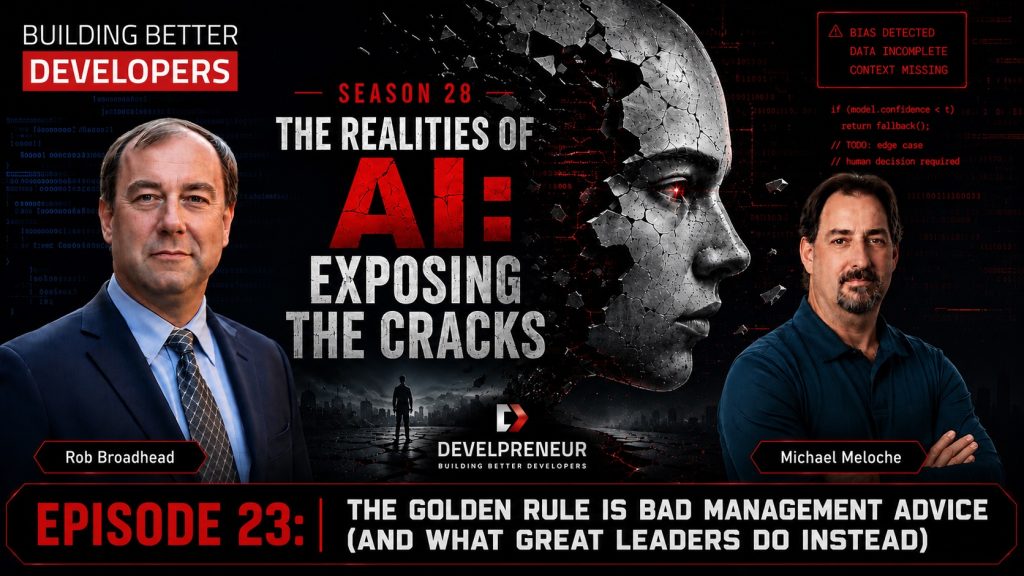
Season 28 is centered on AI Exposing the Cracks, and this conversation fits that theme perfectly.
As AI gets better at repetitive work, answering questions, generating content, and automating tasks, something shifts. The technical work gets easier. The human work gets more valuable.
AI can summarize reports, draft emails, and generate software. It can’t build trust. It can’t inspire a struggling employee. It can’t create genuine relationships between coworkers.
Joe notes that technology keeps improving while our ability to build meaningful relationships often moves the other direction. Younger generations are more digitally connected than ever, yet plenty of organizations still struggle to build authentic workplace relationships. That makes leadership more important in an AI-driven future—not less.
People Buy Confidence
Another idea worth sitting with: Joe’s distinction between important purchases and ordinary ones.
When something really matters to someone, they usually want another person involved. They want advice, reassurance, and confidence. That’s why people still seek out trusted advisors for major financial decisions, healthcare, consulting, legal services, and business strategy—even when AI can answer plenty of their questions.
As leaders and business owners, we’re often selling confidence as much as we’re selling expertise.
Final Thoughts
Leadership isn’t about finding one style that works for everyone. It’s about understanding the people you lead well enough to adapt your communication, expectations, and support to help them succeed.
The Golden Rule teaches kindness. Great leadership requires something more—curiosity, listening, and recognizing that every employee, customer, and business relationship is different.
As AI automates more of our daily work, those human skills won’t matter less. They’ll become your greatest competitive advantage.
Stay Connected: Join the Developreneur Community
👉 Subscribe to Building Better Developers for more conversations on momentum, leadership, and growth. Whether you’re a seasoned developer or just starting, there’s always room to learn and grow together. Contact us at [email protected] with your questions, feedback, or suggestions for future episodes. Together, let’s continue exploring the exciting world of software development.