
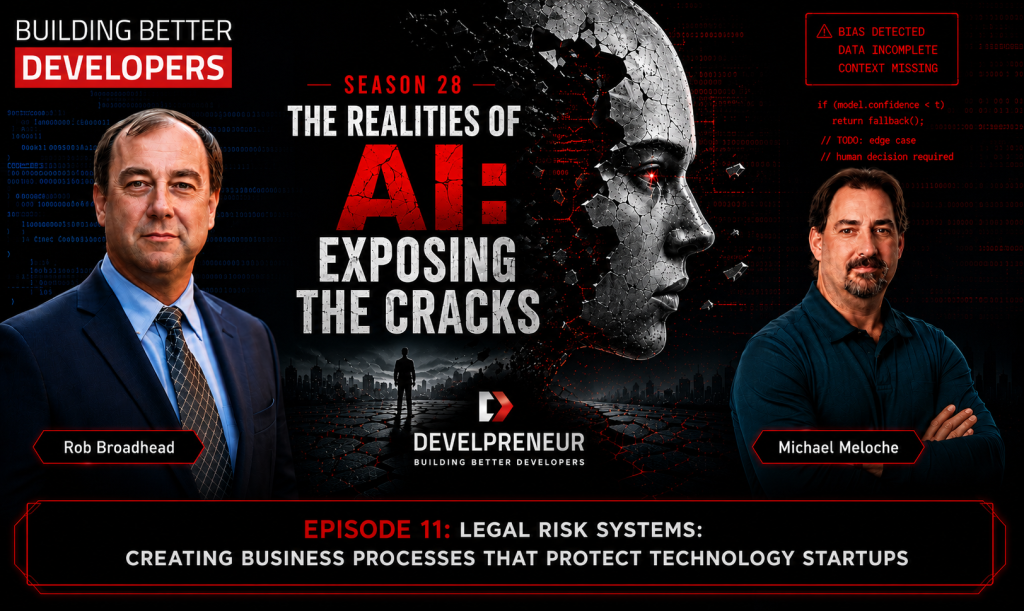

The most successful startups do not rely on luck. They build repeatable Legal Risk Systems that help prevent small mistakes from becoming expensive disasters. During Part 2 of our conversation with Phil Crowley, the discussion moved beyond business formation and into a broader challenge facing modern founders: how to manage legal risk in a world increasingly influenced by AI, automation, rapid growth, and limited resources.
The lesson was simple but powerful. Legal protection should not be treated as an event. It should be treated as a system.
Who Is Phil Crowley?
Phil Crowley is the Founder and Managing Partner of Crowley Law LLC. Before launching his own practice, he spent approximately three decades as Assistant General Counsel at Johnson & Johnson, working closely with business leaders, innovators, and technology-focused organizations.
His background is particularly unique because he began his professional career as a research physicist before transitioning into law. That combination enables him to bridge the communication gap that often exists between technical founders and legal professionals.
Crowley now focuses on helping technology entrepreneurs commercialize innovation while avoiding common legal mistakes that can derail growth.
Follow Phil on LinkedIn: https://www.linkedin.com/in/philcrowleynjny/
Legal Risk Systems Start with Process, Not Paperwork
Many entrepreneurs believe legal work begins and ends with filing an LLC. That mindset creates blind spots. Legal protection requires ongoing processes that support the business as it evolves.
Examples include:
- Contract review procedures
- Intellectual property audits
- Annual compliance reviews
- Founder agreement updates
- Vendor documentation
These activities create consistency. Without systems, businesses rely on memory. And memory is unreliable. Businesses scale through systems. Risk management is no exception.
Legal Risk Systems
The AI Temptation
One of the most interesting discussions centered on AI-generated legal content.
Today, founders can ask an AI platform to generate:
- Contracts
- NDAs
- Service agreements
- Terms of service
- Business policies
The convenience is undeniable. The risk is equally real. AI generates responses from patterns. It does not understand the specific context of your business. An agreement that worked for another company may be completely inappropriate for yours. Even worse, AI may surface examples that became popular because they were involved in legal disputes. Popularity does not equal quality.
The Human Validation
AI can accelerate research.
- It can assist with drafting.
- It can organize information.
What it cannot do is replace professional legal judgment.
The most effective workflow is:
- Use AI for research and preparation.
- Create a draft framework.
- Engage qualified legal counsel.
- Validate assumptions before execution.
This approach improves efficiency without increasing unnecessary risk. AI can reduce drafting time, but cannot eliminate legal accountability.
Building Relationships Instead of Buying Documents
Another recurring theme was relationship-building. Many founders purchase legal templates and assume the problem is solved. The reality is different. Legal value comes from context. An attorney who understands your business can identify risks you may never think to ask about. That understanding develops over time.
When lawyers learn:
- Your customers
- Revenue model
- Technology stack
- Growth strategy
- Ownership structure
They can provide more strategic guidance. That guidance becomes increasingly valuable as the company grows.
Legal Risk Systems Help Prevent Founder Disputes
Every startup begins with optimism. Very few founders launch businesses expecting future conflict.
- Yet growth changes circumstances.
- People change jobs.
- People relocate.
- Personal priorities shift.
- Ownership expectations evolve.
Without clear systems governing these transitions, disagreements become personal.
Strong startup systems are established:
- Ownership rules
- Vesting schedules
- Decision authority
- Exit procedures
- Compensation expectations
The goal is not distrust. The goal is clarity. Good agreements preserve relationships because they remove ambiguity.
Legal Risk Systems and Specialized Expertise
Crowley emphasized the importance of finding specialists rather than generalists.
Technology businesses face unique challenges involving:
- Software ownership
- Licensing
- Intellectual property
- Data protection
- Investment structures
Specialized attorneys encounter these issues regularly. As a result, they often identify risks faster and provide more practical solutions. This mirrors what happens in software development. When a company needs cybersecurity expertise, it seeks specialists. Legal guidance should follow the same principle.
Creating an Annual Legal Review Process
One practical idea discussed was maintaining regular communication with legal advisors. Many founders wait until a crisis appears. A better approach is creating an annual review process.
Topics might include:
- New business risks
- Contract changes
- Hiring plans
- Funding opportunities
- Intellectual property developments
These conversations often uncover issues while they remain manageable. That proactive mindset transforms legal support from emergency response into strategic planning. Schedule an annual legal review the same way you schedule financial planning sessions.
Conclusion
Strong businesses are built on repeatable systems. The same principle applies to risk management.
Effective Legal Risk Systems combine professional guidance, documented processes, ongoing reviews, and responsible use of AI. Founders who build these systems early gain more than protection—they gain confidence that their company can grow without being undermined by avoidable mistakes.
Legal success is rarely about reacting faster. It is about preparing earlier.
Stay Connected: Join the Developreneur Community
👉 Subscribe to Building Better Developers for more conversations on momentum, leadership, and growth. Whether you’re a seasoned developer or just starting, there’s always room to learn and grow together. Contact us at [email protected] with your questions, feedback, or suggestions for future episodes. Together, let’s continue exploring the exciting world of software development.